Because the safety of a home is no longer measured by products, but by its real performance.
The safety of a home is not measured by the products installed, but by its real performance against an attempt to intrusion. For years the sector has assessed residential safety based on devices: alarms, cameras or certified locks.
However, a home is not safe for the products it has, but for how the whole system works when an attack occurs.
paradigm change
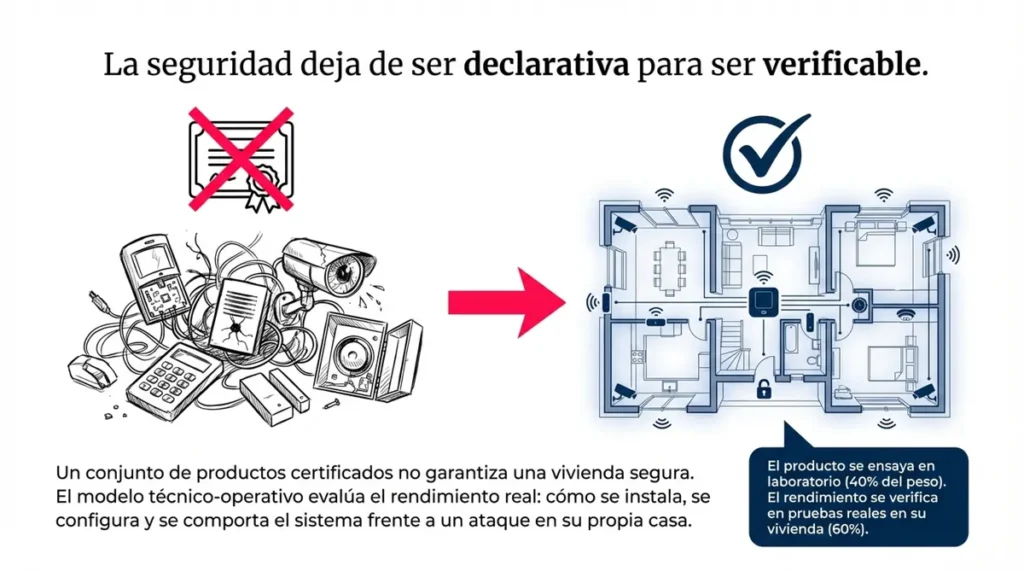
Traditional security was based on statements:
Certified products
Systems approved
Trade catalogues
But a house is not safe for what it declares a product. It's safe for how the whole system behaves when an attack occurs. Security is no longer declarative to become verifiable.
.
How security is really measured
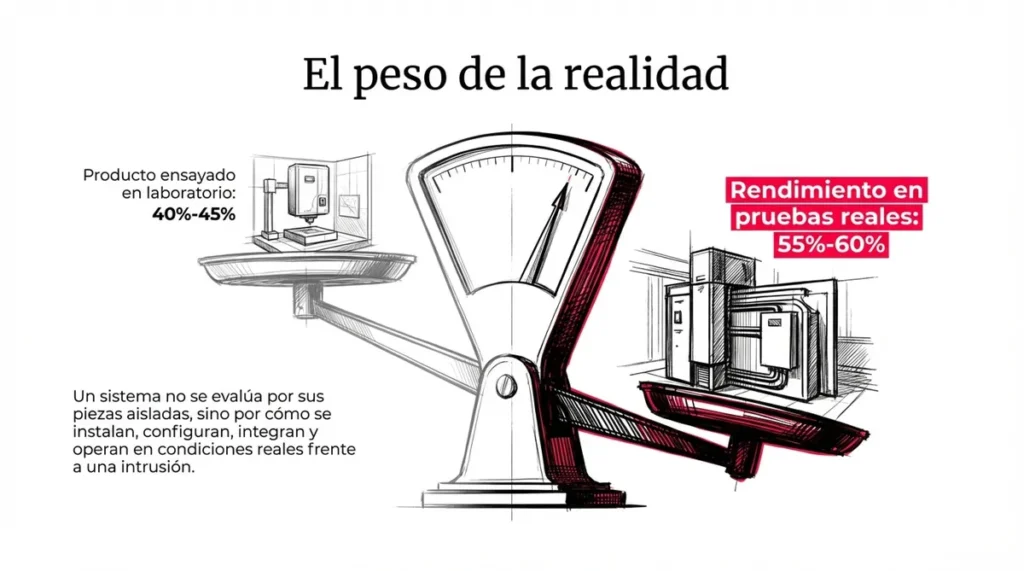
In the technical model GDR-ET-08 the evaluation is divided between two dimensions:
Laboratory product test
Behavior of the system installed in the housing
The weight of actual performance exceeds that of product tests.
Because safety depends on:
The installation
Integration
The configuration
Maintenance
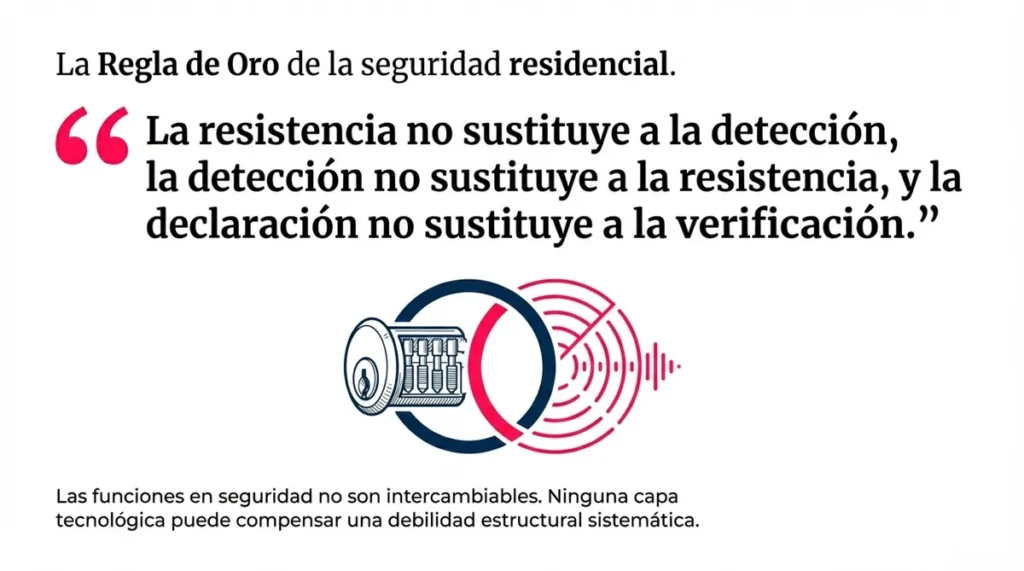
The fundamental rule of residential security
There is a basic rule in residential security:
Resistance does not replace detection.
The detection does not replace the resistance.
And the declaration does not replace verification.
Security functions are not interchangeable. A structural weakness is not compensated by technology.
Anatomy of a residential security system
Safe housing is not a set of devices. It's a structured system in layers. Each layer has a specific function within the security architecture. When a layer fails, the entire system loses efficiency.
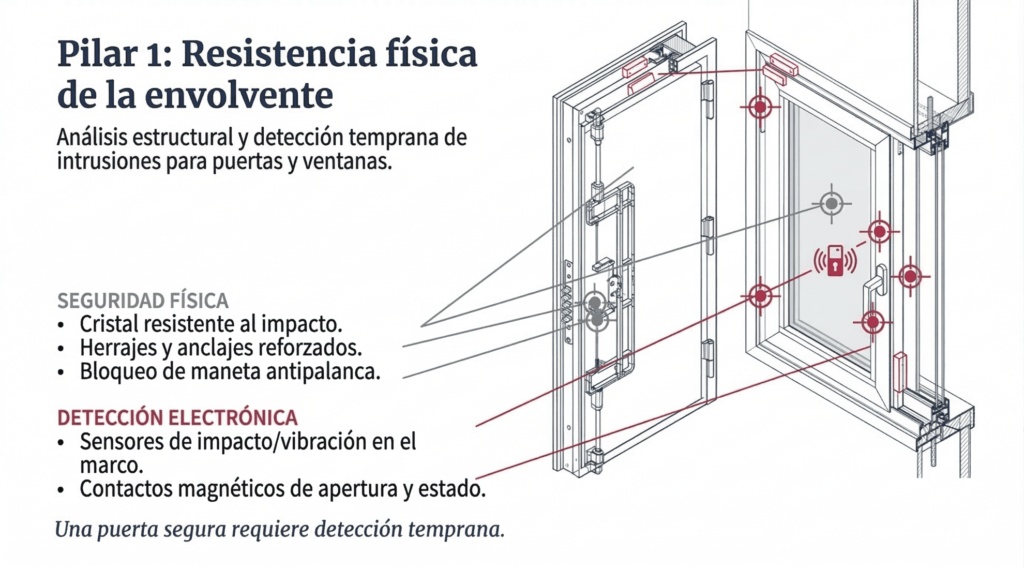
First pillar: physical resistance
The physical envelope is the first line of defense:
Doors
Windows
Herrages
Structural anchorages
The resistance determines how long an intrusion can be delayed. But there is a key reality: A robust door loses value if the aggressor can work without pressure or detection.
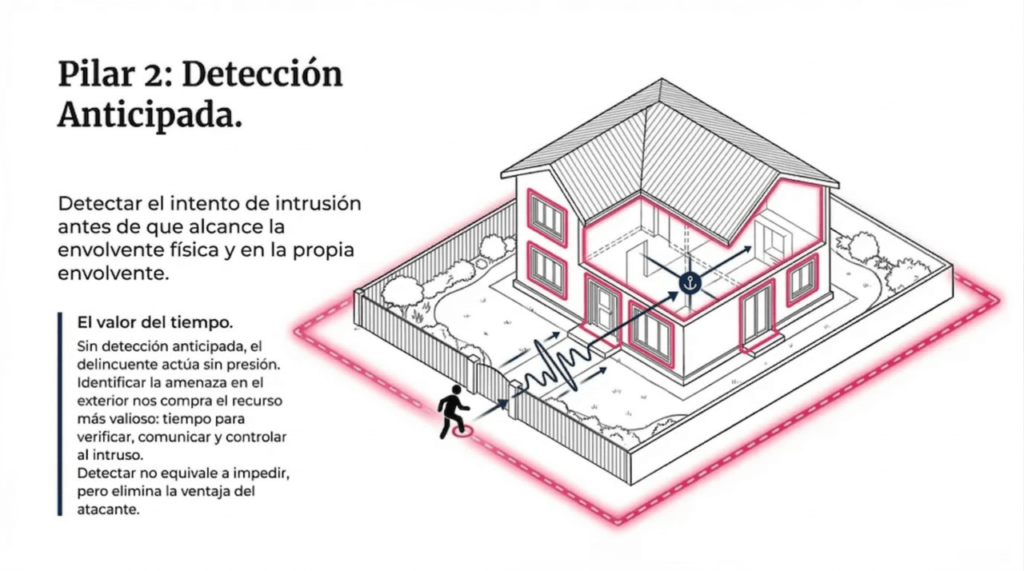
Second pillar: early detection
The aim of detection is not just to record an intrusion. It's anticipate the attempt of intrusion. Early detection introduces pressure on the aggressor and reduces its operating time. In security, time is a critical variable.
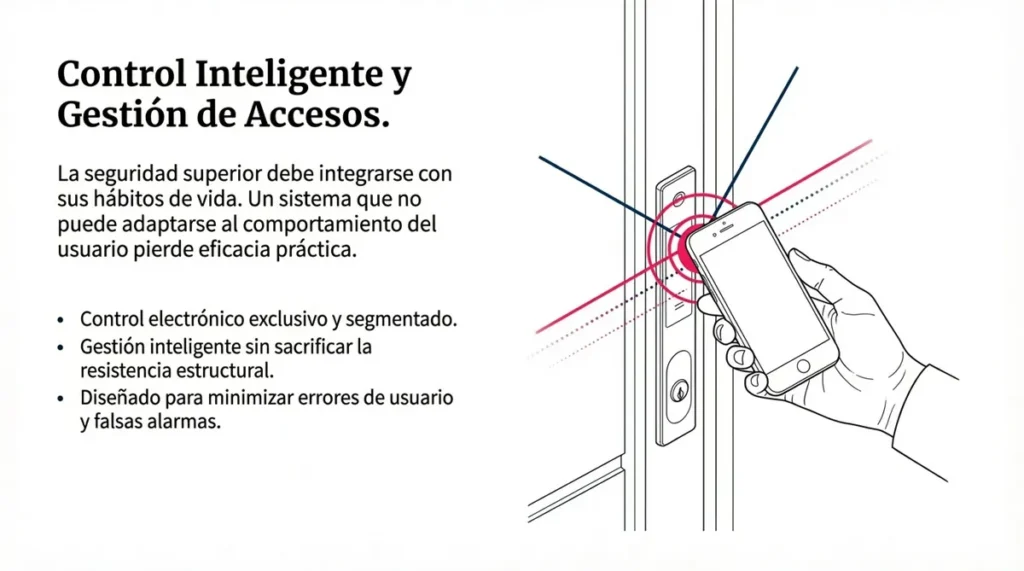
Operational system management
A safety system must also be adapted to the user's behaviour. If the system is uncomfortable or complex:
Disable
Unknown
It's used badly.
This is why modern security integrates intelligent control and access management.
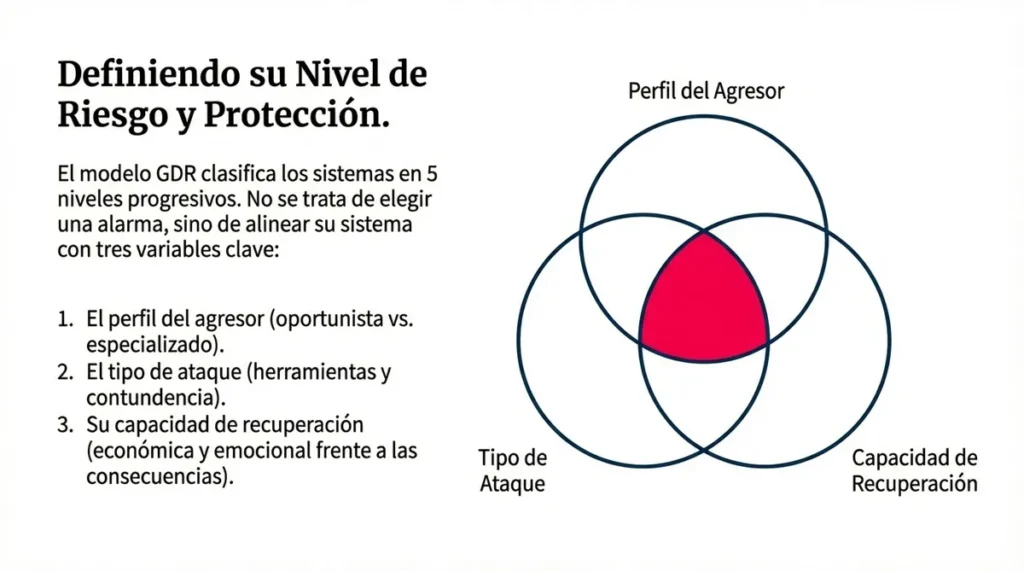
How the safety level is defined
The GDR model does not define product safety. defines it by three key variables:
Profile of the aggressor
Type of attack
Consequences accepted
From these variables, the GDR technical model classifies residential security systems into five progressive levels of protection. Each level reflects the degree of technical coherence of the system and the type of aggressor it can offer resistance to.
Classification of safety levels
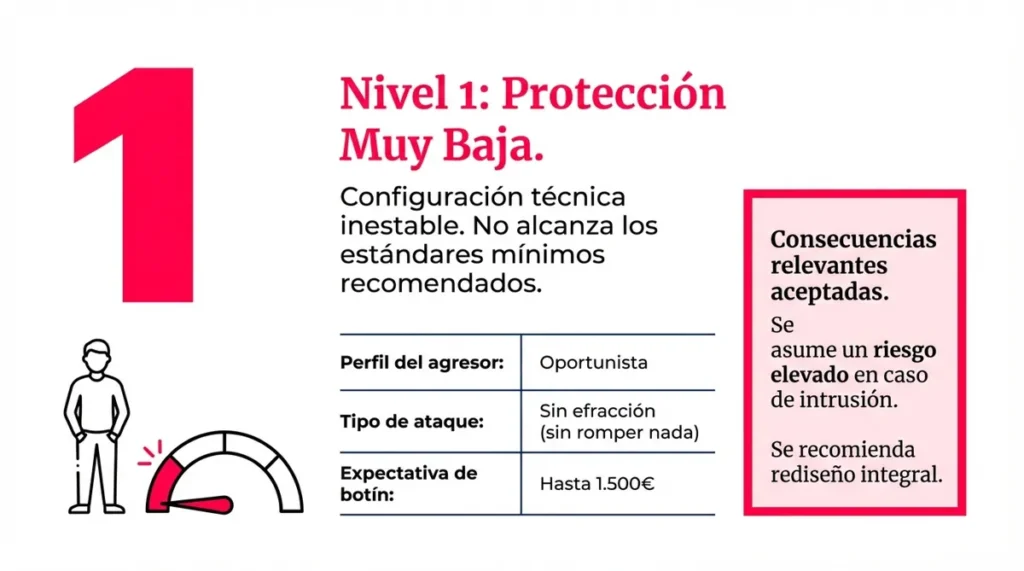
Level 1: Very low protection
This level corresponds to systems with Unstable technical configuration and clearly inadequate defenses. The housing has obvious vulnerabilities to opportunistic intrusions and the risk assumed is high.
It is common in houses where safety has been resolved improvised or based only on isolated devices.
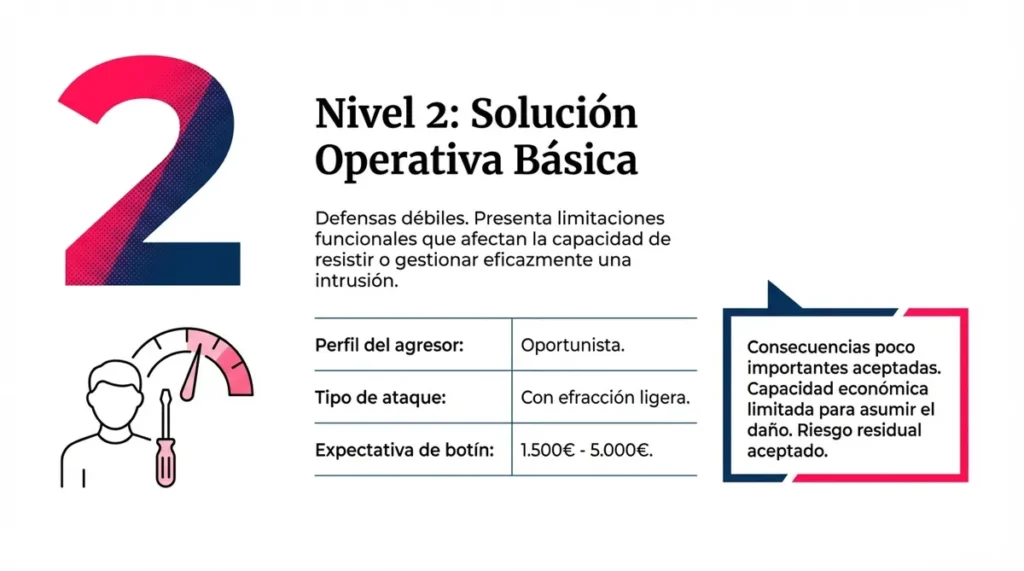
Level 2: Basic operating solution
At this level there is a minimum safety structurebut with important functional limitations.
The system provides some protection against basic threats, although it maintains weaknesses that can be exploited by opportunistic aggressors.
Security is present, but the margin of improvement remains significant.
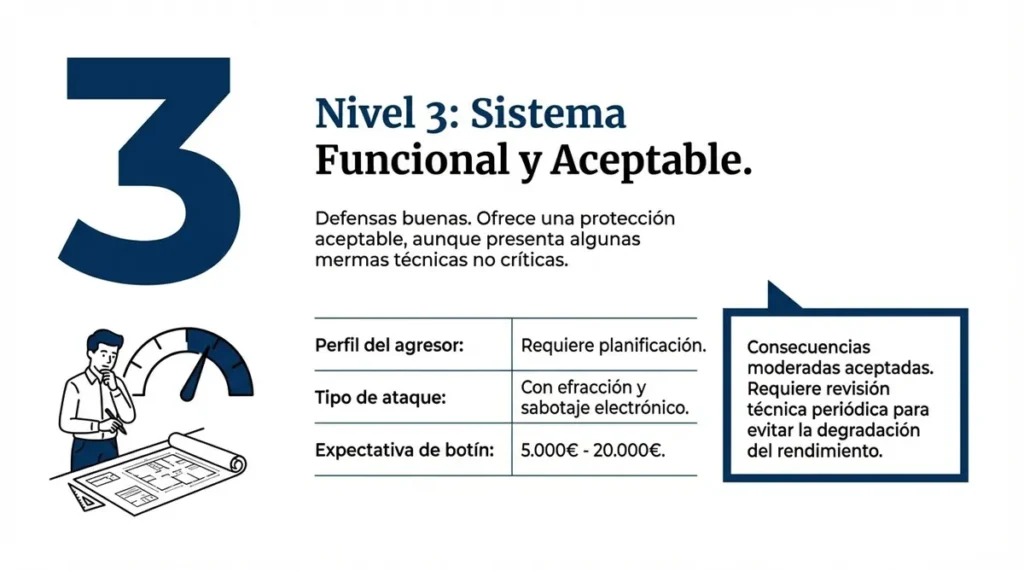
Level 3: Functional and acceptable system
The system provides a reasonable protection against common intrusions and has a functional defensive architecture.
However, there may be small technical weaknesses or lack of integration that require regular review to prevent system degradation.
Safety is beginning to be consistent, though still does not reach an optimal level of robustness.
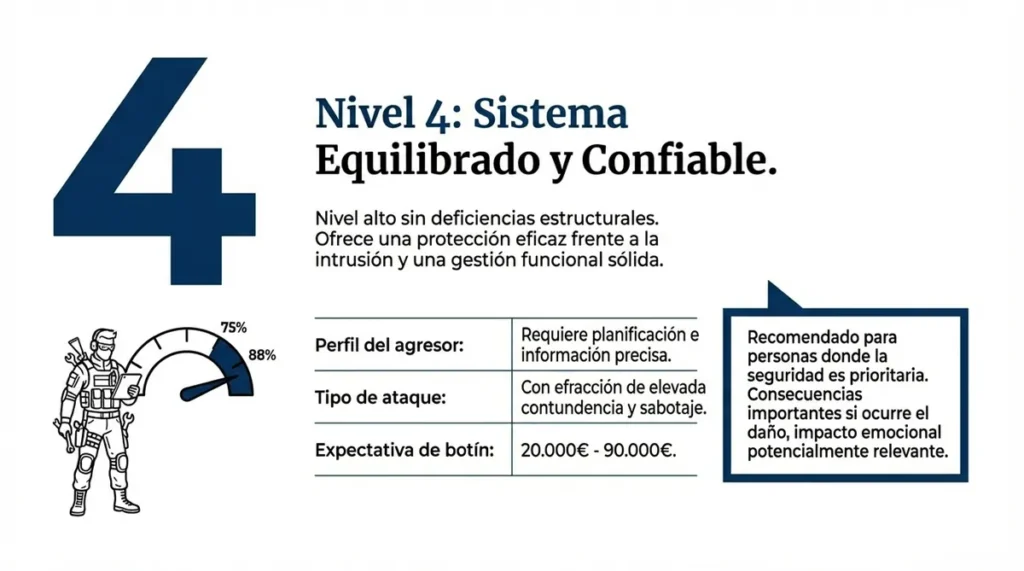
Level 4: Balanced and reliable system
This level corresponds to a well-designed and coherent security architecture.
The different defensive layers work in a coordinated manner, providing effective protection against intrusions with a certain degree of planning.
It is the recommended level when housing security is a priority.
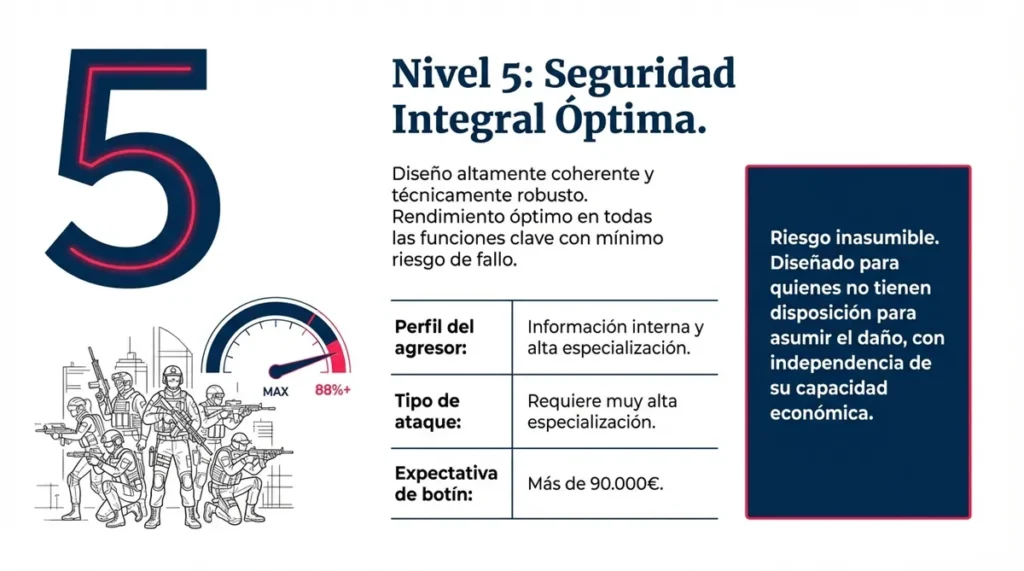
Level 5: Balanced and reliable system
The system presents a highly coherent and technically robust defensive architecture.
All critical functions: resistance, detection, management and verification work in an integrated way, minimizing the possibility of failure.
This level is designed for environments where risk is not assumed and security requires a high-level comprehensive approach.
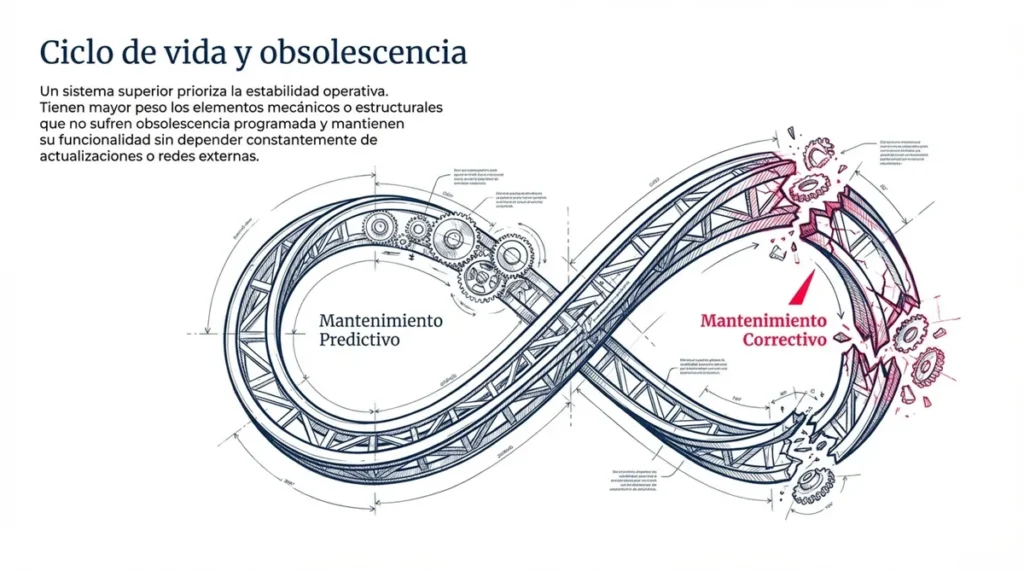
System life cycle
Security systems are also aging.
An effective system prioritizes:
Operational stability
Predictive maintenance
Reduced technological dependence
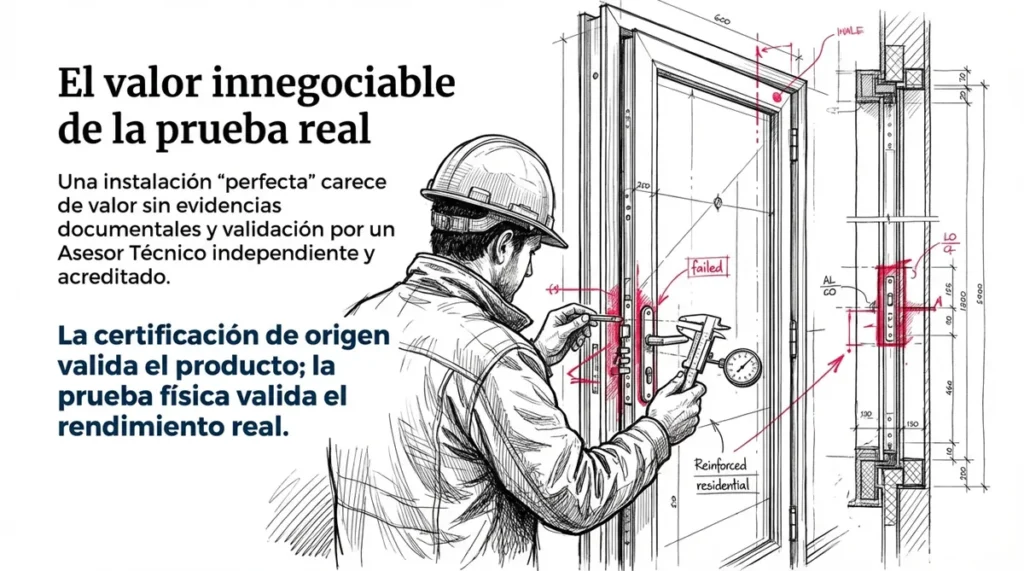
Technical verification
An apparently perfect installation may not be safe. The certification validates the product. The physical test values the actual performance of the system. That's why technical verification is the final step in security architecture.
Conclusion
Residential security is evolving from a product-based approach to an architecture, performance and verification approach. Understanding this change is essential to design truly safe housing in an environment where threats also evolve.
PBiC: technical-functional evaluation of residential safety
In PBiC we analyze housing safety from a technical approach based on methodology Genoma del Robo and the GDR-ET-08 specification.
We design, verify and audit residential security systems based on real performance.